








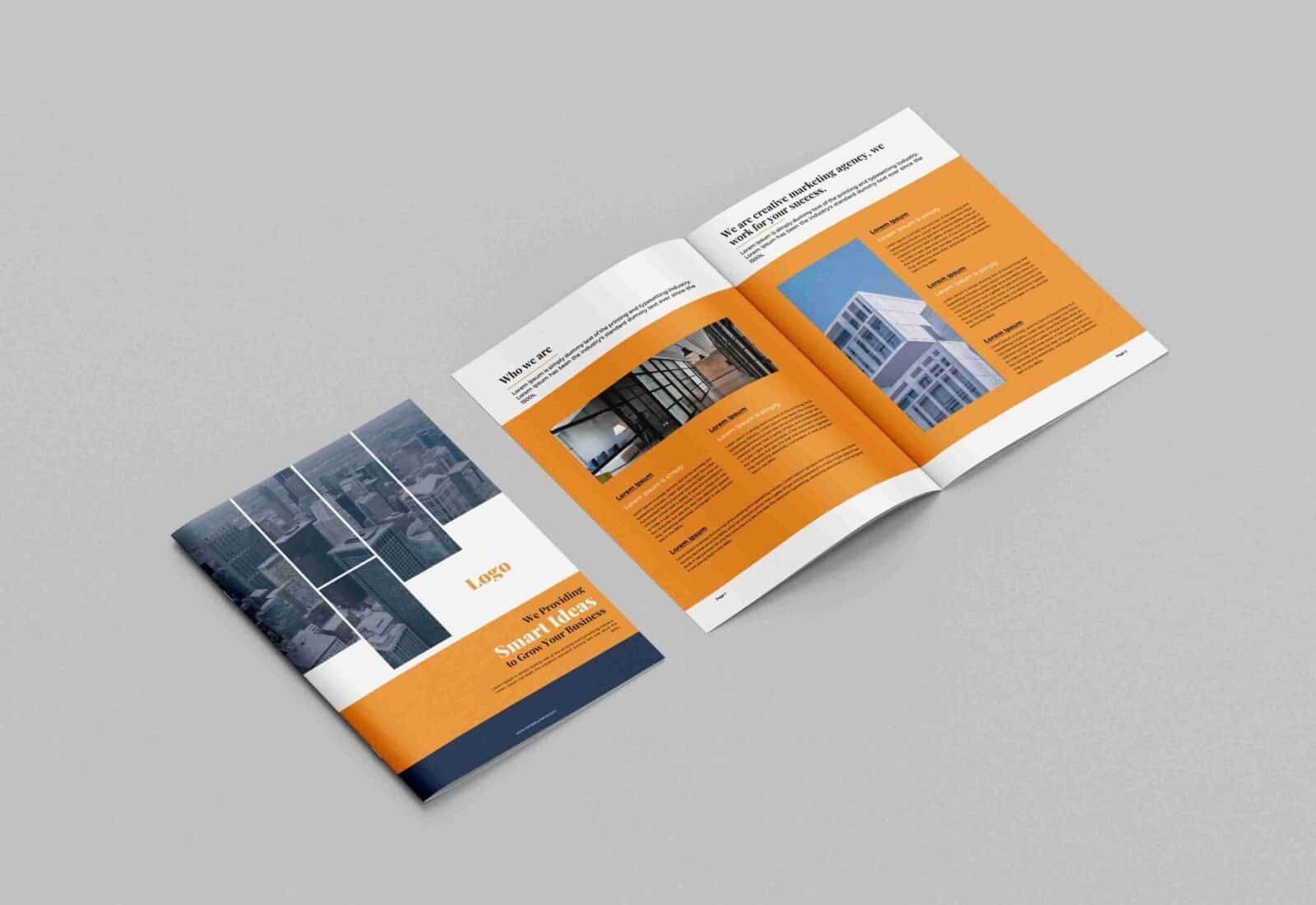



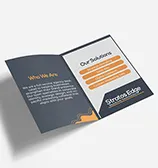
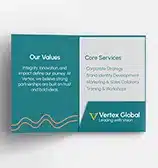
















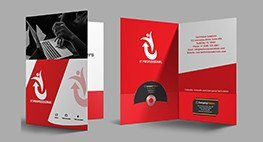
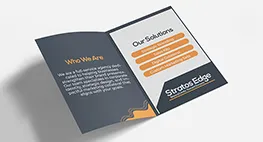
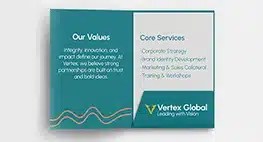
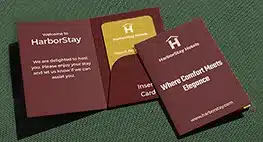


















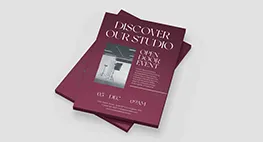

Tri-Fold vs Bi-Fold vs Z-Fold vs Gate-Fold Brochures: Layout Guide
In commercial sales, trade show marketing, and corporate communications, brochures remain one of the most versatile physical collateral formats available.

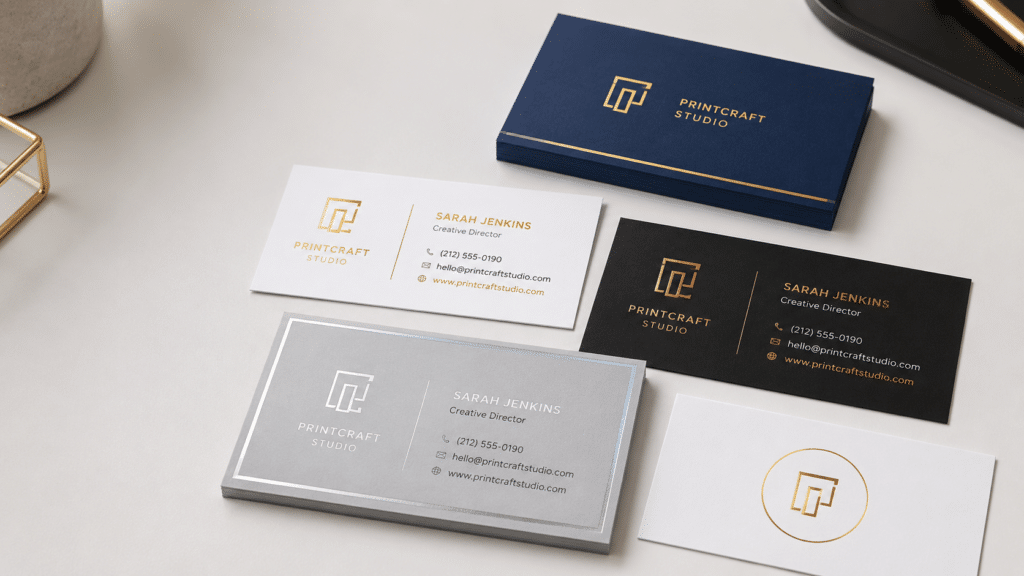
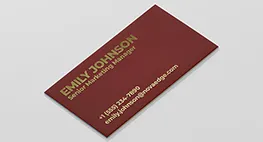
In an increasingly crowded marketplace, standard marketing materials often struggle to leave a lasting mark during high-stakes networking events and client consultations. When meeting prospective investors, executive buyers, or luxury clientele, your business card serves as a tangible extension of your brand’s standards. Adding metallic foil accents transforms ordinary paper stationery into a striking, multi-sensory asset that captures attention the moment it catches the light.
While standard full-color cards work well for high-volume promotional handouts, specialty finishes communicate an immediate sense of exclusivity and prestige. Understanding when and how to implement metallic elements ensures your investment generates tangible commercial returns. This comprehensive guide explores the strategic advantages of metallic foil, popular application styles, cardstock pairings, and technical design rules to help you decide when foil accents are worth the upgrade for your business across the United States.
Human visual perception is naturally drawn to light reflection and tactile contrast. In corporate networking, receiving a card with metallic highlights creates an immediate perception of higher value and professional maturity.
When prospective partners run their fingers across a card featuring metallic foil elements, the dual-texture experience triggers higher recall than flat ink prints. Incorporating metallic accents into your corporate identity signals that your firm values precision, quality craftsmanship, and attention to detail—key attributes that high-value clients look for when choosing corporate service providers.
Ordering custom business cards online with these finishes lets you project that same standard of quality from the very first handshake.
While every business can benefit from polished stationery, certain commercial sectors see significantly higher conversion rates from luxury print finishes.
Achieving a metallic finish on paper involves distinct manufacturing methods, each offering unique physical characteristics and production advantages.
| Foil Application Method | Physical Texture | Ideal Order Volume | Best Suited For |
|---|---|---|---|
| Traditional Hot Stamping | Debossed / Pressed into stock | Medium to large commercial runs | Classic luxury brands seeking a timeless, slightly pressed feel |
| Raised Digital Foil | Dimensional / 3D raised texture | Short runs & quick-turn projects | Modern brands seeking tactile height over velvet matte laminate |
| Inline Cold Foiling | Flat / Flush with ink surface | High-volume wholesale runs | Full-color gradients beneath translucent metallic sheens |
Foil is no longer limited to standard yellow gold. A broad spectrum of metallic shades allows you to match your exact brand identity with complementary finishes.
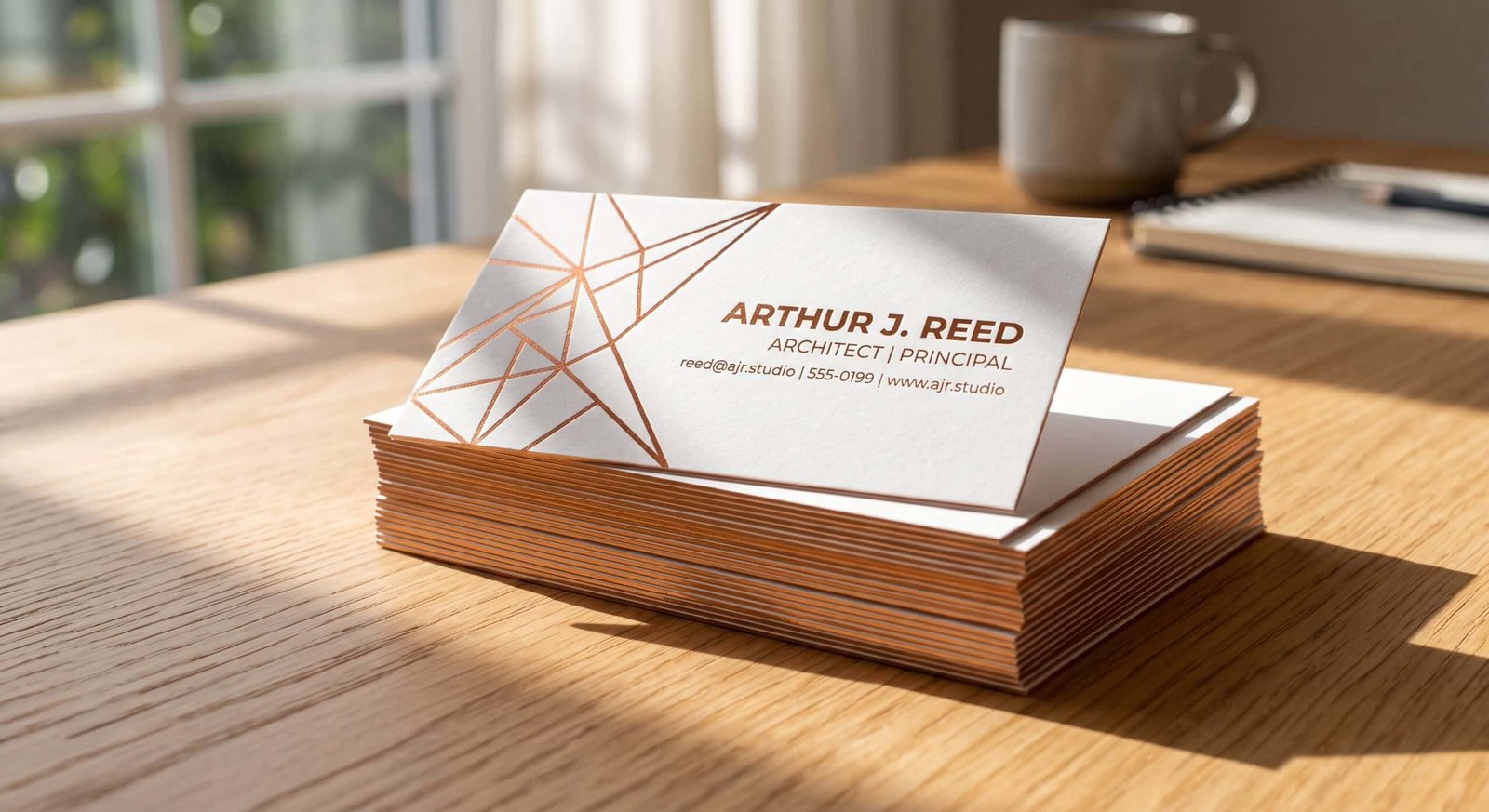
The base paper stock you select serves as the structural foundation for your metallic foil. Flimsy paper diminishes the impact of foil, while heavy stocks enhance its luxury feel.
When designing for foil printing, less is often more. Overusing metallic elements across an entire layout can overwhelm the viewer and make typography difficult to read.
To maximize visual elegance and legibility:
Evaluating whether foil accents make commercial sense for your organization comes down to the lifetime value of your customer relationships.
If your business relies on closing high-ticket enterprise contracts, retaining executive consulting retainers, or selling premium luxury products, the fractional increase in unit cost for specialty foil printing delivers an outsized return on investment. Handing an executive prospect a premium foil card leaves a lasting tactile impression that helps your proposal stand out from competing bids.
Achieving crisp registration between your printed ink layers and metallic foil requires precise prepress file preparation.
Creating a unified luxury presentation across all client touchpoints strengthens your brand’s authority from the initial greeting to final contract delivery.
Producing immaculate metallic cards requires advanced printing presses, tight registration calibration, and experienced prepress oversight.
At Printin Budget, we print premium corporate cards designed to help professionals command attention in competitive industries. Our prepress specialists carefully review your foil mask files, ink separation layers, and safety margins before production begins.
Whether you need a specialized short run of executive cards or wholesale quantities for an entire regional leadership team, we combine heavy cardstocks, durable foil bonds, and dependable service to support your commercial growth.
Connect with Printin Budget to explore metallic foil swatches, review cardstock finishes, or request a custom printing quote for your project.
Q1: What is the difference between traditional hot foil stamping and raised digital foil?
Traditional hot foil stamping uses a heated metal die to press metallic foil into the paper, creating a debossed (slightly indented) look suitable for medium-to-large press runs. Raised digital foil uses a liquid polymer underlayer to create a 3D, raised tactile metallic effect over a velvet matte laminate without physical dies, ideal for short-to-medium runs.
Q2: Which industries benefit most from metallic foil business cards?
High-ticket, relationship-driven sectors see the greatest return from foil accents, including luxury real estate agencies, architectural firms, boutique law practices, wealth management consultants, high-end cosmetic brands, and bespoke hospitality groups.
Q3: How do you set up artwork files for metallic foil printing?
Foil artwork requires two aligned layers: a standard full-color CMYK layer for base printing and a separate vector foil mask layer colored in 100% K (solid black). The foil mask defines the exact vector outlines where the metallic foil will bond.
Q4: What is the minimum line weight required for foil stamping?
To prevent foil from breaking, flaking, or bleeding together, all vector stroke lines and typography paths intended for foil application should maintain a minimum stroke thickness of 0.5 pt (and at least 1.0 pt for raised digital foil).
Q5: What base paper coating pairs best with metallic foil accents?
Velvet soft-touch lamination is the ideal base coating for metallic foil. Its non-glare, ultra-dull matte surface provides maximum visual contrast against the reflective, high-shine metallic finish, accentuating the foil’s luster.
In commercial sales, trade show marketing, and corporate communications, brochures remain one of the most versatile physical collateral formats available.

Selecting the right physical print format is one of the most critical decisions when launching a direct-to-consumer marketing or local

In service industries, field contracting, logistics, and wholesale commerce, generating instant physical documentation during client interactions remains critical for legal