Manage your profile, update details, track orders, and securely access information.
Learn how to select products, upload designs, checkout, and confirm orders.
Request personalized sizes, finishes, or designs tailored to your unique requirements.
Understand delivery timelines, free shipping, expedited options, and lost package support.
Guidelines on file formats, bleed, resolution, proofs, and free design assistance.
Get clear details on payments, invoices, discounts, refunds, and tax information.
Explore paper, packaging, eco-friendly, waterproof, and specialty material printing options.
Reach us via live chat, email, or phone for immediate help.
Navigating commercial print specifications, prepress requirements, and paper stocks is essential for producing high-quality business stationery, marketing collateral, and large-format signage. This comprehensive resource covers core technical guidelines, standard dimensions, folding options, and material differences across modern print production.

RGB (Red, Green, Blue) is an additive color model used for digital screens that emit light, capable of rendering highly saturated, neon tones. CMYK (Cyan, Magenta, Yellow, Key/Black) is a subtractive color model used by commercial printing presses where physical ink is layered onto paper. Designing in RGB requires automatic conversion to CMYK before printing, which can cause bright digital colors to shift or print darker. Artwork files should always be built in CMYK from the start.
DPI stands for Dots Per Inch, which measures the density of ink droplets a press applies per linear inch of paper. The commercial printing benchmark for crisp typography, vector logos, and photography is 300 DPI at 100% physical size. Files submitted at web resolutions like 72 DPI appear pixelated, fuzzy, or jagged when transferred to physical paper.
A bleed margin is the extra area of background artwork, color, or imagery that extends beyond the final cut line of a document. In commercial production, sheets are printed together and trimmed with high-speed mechanical blades. Extending artwork 0.125 inches (1/8 inch) past the trim line ensures that minor microscopic blade shifts do not leave raw white paper borders along the edges of the finished piece.
The trim line represents the exact perimeter where mechanical cutting blades separate individual pieces from the parent sheet. The safe zone (safety margin) is an interior boundary set 0.125 inches to 0.25 inches inside the trim line. All critical contact information, logos, and text must remain within the safe zone to ensure they are not accidentally clipped during automated trimming.
Vector artwork consists of mathematical paths, curves, and anchor points created in programs like Adobe Illustrator. Vectors can be scaled infinitely from a tiny business card icon to a massive building banner without any loss of sharpness or resolution. Raster artwork (such as JPEG, PNG, or TIFF files) is made up of a fixed grid of individual pixels that lose sharpness and become blurry when enlarged beyond their original dimensions.
Converting text to outlines transforms live typographic characters into static vector shapes. This ensures the printing press reproduces the exact typeface geometry without requiring the original font file to be installed on the prepress computer, eliminating unexpected font substitutions or text-reflow errors.
A digital prepress proof is an electronic layout file (typically a high-resolution PDF) supplied to the customer before physical production begins. It illustrates exact trim lines, bleed margins, panel folding sequences, and color placements, allowing the customer to review and approve layout accuracy before the job goes to the press.
Digital printing uses electrostatic rollers and toner or liquid ink to apply artwork directly onto paper without physical plates, making it fast and efficient for short-to-medium runs. Offset printing transfers ink from metal plates onto rubber blankets that roll the ink onto large sheets of paper, providing high color consistency and efficiency for large-volume print runs.
In North American paper manufacturing, a "point" (pt) represents one one-thousandth of an inch (0.001 inch) of paper thickness (caliper). A 14pt cardstock measures 0.014 inches thick, a 16pt cardstock measures 0.016 inches thick, and an 18pt cardstock measures 0.018 inches thick. Higher point values indicate thicker, more rigid cardstock.
"Text" paper (such as 70lb, 80lb, or 100lb Text) is lightweight and flexible, commonly used for the interior pages of catalogs, folded brochures, flyers, and letterhead. "Cover" stock (also referred to as cardstock, such as 80lb Cover, 100lb Cover, 14pt, or 16pt) is heavier, stiffer, and more durable, designed for business cards, postcard mailers, presentation folders, and catalog covers.
Gloss paper features a reflective coating that enhances contrast and color saturation, making photographic details pop. Matte paper features a smooth, non-reflective coating that diffuses light, eliminating glare under bright lighting conditions and improving the legibility of dense text blocks.
Velvet soft-touch lamination is a bonded matte polypropylene film applied over printed cardstock. It creates a velvety, suede-like tactile surface that feels like a rose petal. Beyond its tactile appeal, it provides a protective barrier that repels water, resists scuffs, and minimizes visible finger smudges on dark ink backgrounds.
High-Gloss UV coating is a liquid polymer applied over printed sheets and cured instantly under ultraviolet light. It creates a tough, highly reflective surface that protects underlying inks from scratches, environmental moisture, and handling friction while maximizing color depth.
Spot UV is a clear, high-gloss finish applied selectively to specific areas of a printed design (such as a logo, headline, or geometric pattern) rather than the entire sheet. When applied over a matte or soft-touch background, it creates a tactile and visual contrast between dull and glossy textures.
Scoring creates a mechanical crease along the designated fold line, compressing the interior paper fibers before the sheet is folded. Without pre-scoring, folding heavy paper (such as 100lb cover or 14pt+ stock) causes the paper fibers to tear and printed ink to crack along the spine, resulting in rough, jagged edges.
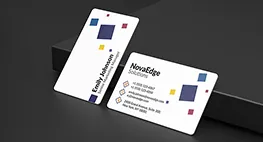
The universal standard business card trim size in the United States is 3.5 inches by 2.0 inches. With a standard 0.125-inch bleed added to all four outer edges, the full un-trimmed design canvas must be set to 3.75 inches by 2.25 inches.
The safe zone for a standard 3.5-inch by 2.0-inch card is 3.25 inches by 1.75 inches. Keeping all names, titles, telephone numbers, and vector graphics inside this boundary ensures that mechanical blade variations during trimming do not cut off contact details.
Hot foil stamping uses heat and pressure to transfer metallic or pigmented foil from a carrier film onto paper using an engraved metal die. This process presses the metallic foil slightly into the paper fibers, creating a debossed texture.
Raised digital foil applies a clear, dimensional liquid polymer over a velvet matte laminate base, followed by the application of metallic foil that bonds to the raised areas. This produces a 3D metallic element without requiring physical metal dies.
In the United States and Canada, standard business letterhead measures 8.5 inches by 11.0 inches (US Letter Size). Legal correspondence often uses 8.5 inches by 14.0 inches (US Legal Size), while international correspondence outside North America relies on 8.27 inches by 11.69 inches (ISO A4 Size).
Standard corporate letterhead layouts allocate the top 1.5 inches to 2.0 inches for the logo and header elements, leave 0.75-inch margins on the left and right sides for typed body text, and keep footer contact details at least 0.5 inches to 0.75 inches above the bottom edge.
A 70lb bright white opaque text stock offers sufficient paper opacity to prevent typed ink from showing through to the reverse side, provides a smooth surface for sharp logo reproduction, and feeds cleanly through standard desktop laser and inkjet office copiers without jamming.
A standard #10 business envelopes measures 4.125 inches by 9.5 inches (4-1/8 inches by 9-1/2 inches). It is designed to hold standard 8.5-inch by 11.0-inch letterhead folded into three equal panels.
A standard #9 business envelope measures 3.875 inches by 8.875 inches (3-7/8 inches by 8-7/8 inches).
Envelope nesting is the insertion of a smaller reply envelope inside a larger outbound mailing envelope. Because a #9 envelope is approximately 0.25 inches shorter and 0.625 inches narrower than a #10 envelope, it fits flat inside a #10 envelope without requiring extra folding, making it ideal for invoice return envelopes, donation mailers, and business reply cards.
A regular envelope features a solid paper face across the entire front. A window envelope features a clear plastic opening positioned in the lower-left section, allowing the recipient's address printed on the internal document to show through, eliminating the need to print individual addresses on the outside of the envelope.
Security tinting is a dense, patterned blue or gray cross-hatch printed across the interior surface of an envelope. It blocks light transmission, preventing sensitive details - such as check numbers, account balances, and private personal information - from being visible through the paper stock.
Moisture-gummed envelopes feature a dry adhesive strip that activates when moistened, designed specifically for automated inserting and sealing machines. Self-seal (peel-and-stick) envelopes have pre-applied adhesive protected by a release paper strip that can be peeled away for fast manual sealing without water.
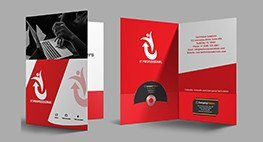
A standard presentation folder measures 9.0 inches by 12.0 inches when folded closed, allowing it to hold standard 8.5-inch by 11.0-inch document sheets, brochures, and sales proposals cleanly without corner overhang.
Standard folder pockets measure 4.0 inches in height, providing sufficient depth to support vertical document stacks while keeping document headers visible.
An expansion spine incorporates two parallel score lines separated by 0.25 inches to 0.5 inches along the center fold. This creates a box-like spine that allows the folder to lay flat when holding thick document stacks, catalogs, or multi-page corporate proposals without bulging.
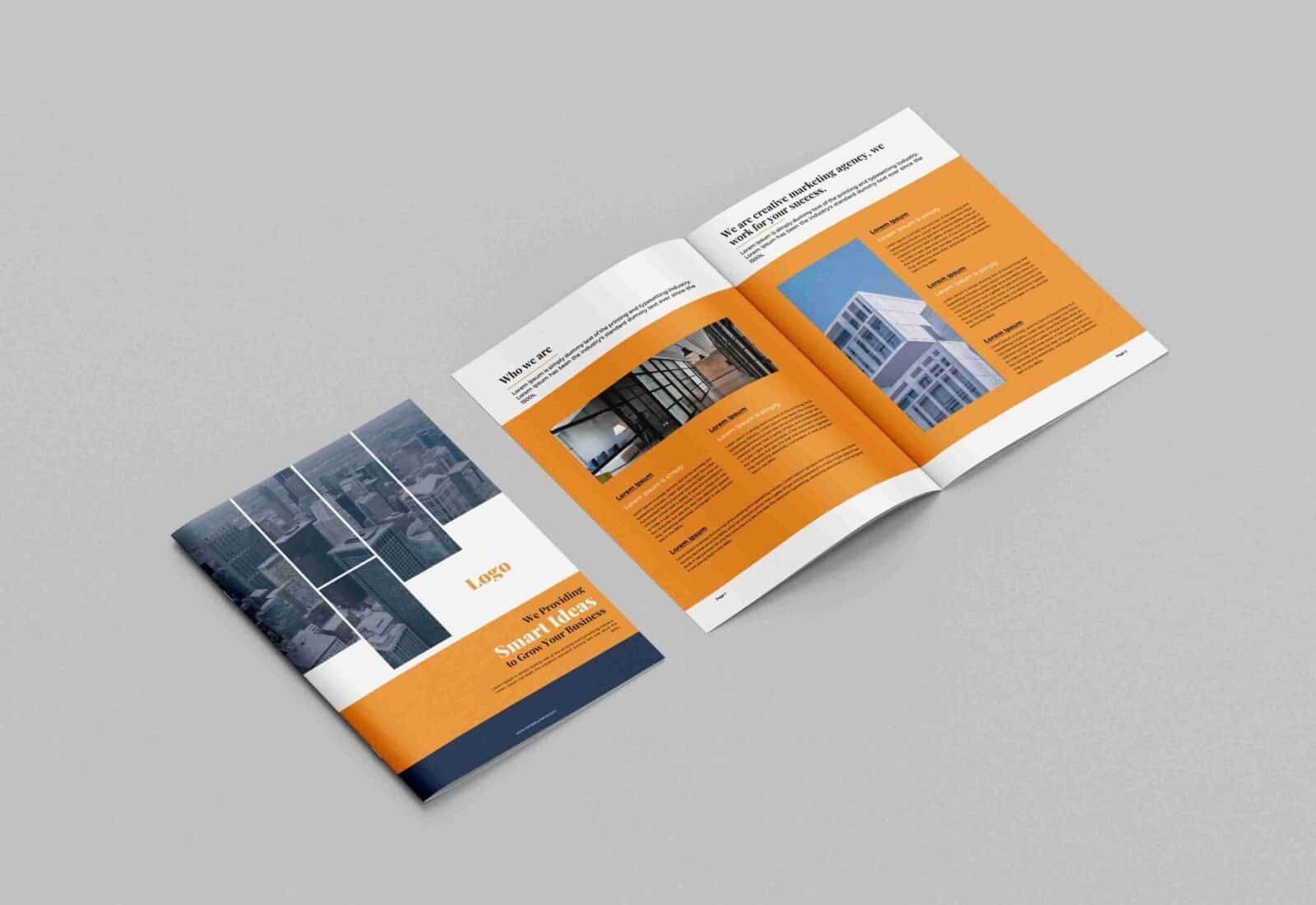
Saddle-stitch binding uses metal wire staples driven through the folded center spine, allowing publications up to 64 pages to lay relatively flat. Perfect binding collates interior pages, mills the spine flat, and glues the pages into a wraparound cardstock cover, forming a square, rigid spine suitable for publications from 48 to over 200 pages.
Page creep occurs in saddle-stitched booklets when multiple folded sheets nest inside one another. The thickness of the paper forces the innermost sheets to extend slightly past the outer sheets at the outer trim edge. Prepress software compensates for creep by shifting interior page margins slightly inward before three-knife final trimming.
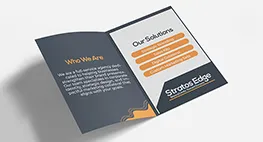
A bi-fold brochure has a single center fold that creates 4 reading panels (folding an 8.5-inch by 11.0-inch sheet into two 5.5-inch by 8.5-inch panels). A tri-fold brochure features two parallel folds that divide the sheet into 6 panels (folding an 8.5-inch by 11.0-inch sheet into three vertical panels measuring roughly 3.687 inches by 8.5 inches).
When a tri-fold brochure closes, the inside panel tucks underneath the two outer panels. If all three panels were the exact same width, the paper thickness would cause the tucked flap to hit the outer spine crease, causing the brochure to buckle rather than laying flat. The inside panel is typically trimmed 0.0625 inches to 0.125 inches narrower to ensure smooth closure.
A Z-fold (accordion fold) divides a flat sheet into three panels of equal width using alternating fold directions. Unlike a tri-fold, the panels do not nest inside one another, allowing the brochure to open outward in a continuous accordion motion that can display panoramic graphics across all three contiguous panels.
A gate-fold features two outer side panels that fold inward to meet flush at the center of the sheet. When opened outward like double doors, they reveal a large, central interior spread, creating an opening reveal for major announcements and luxury product showcases.
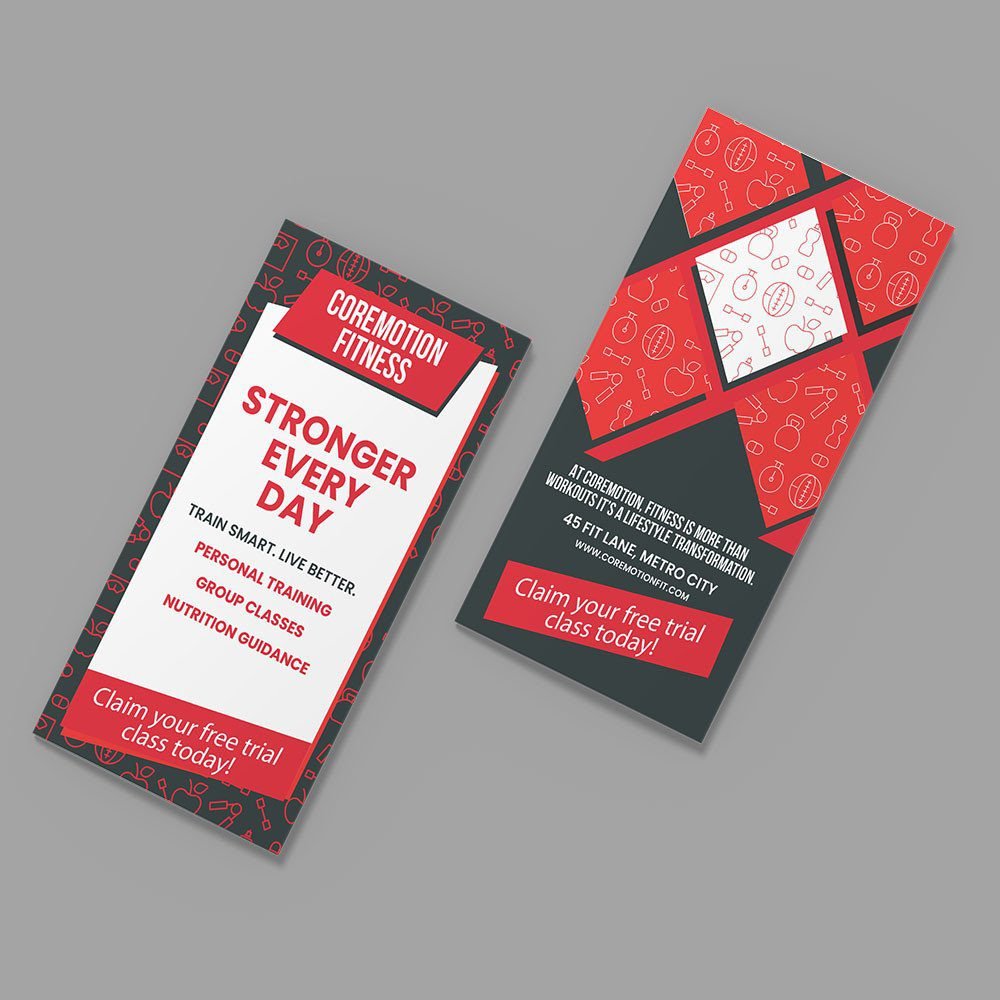
Standard rack cards measure 4.0 inches by 9.0 inches or 3.5 inches by 8.5 inches. They are designed to stand vertically inside standardized acrylic countertop displays, hotel lobby literature racks, and visitor center kiosks without bending.
Commercial First-Class Mail postcards may measure up to 6.0 inches high by 9.0 inches long by 0.016 inches thick, subject to applicable commercial mailing eligibility and preparation standards. Retail First-Class postcards are limited to 4.25 inches high by 6.0 inches long.
Automated postal machinery requires standard postcards to be at least 0.007 inches thick (and at least 0.009 inches thick for commercial postcards exceeding 4.25 inches high or 6.0 inches long) up to a maximum thickness of 0.016 inches. Many standard 14pt and 16pt cardstocks satisfy these thickness parameters.
NCR stands for "No Carbon Required." Carbonless forms use a chemical transfer system: the back of the top sheet is coated with micro-encapsulated dye (Coated Back), while underlying sheets are treated with reactive clay coatings (Coated Front). When a pen applies pressure to the top sheet, the capsules break, releasing dye that reacts chemically with the receptor coating to reproduce handwriting on the pages below.
A standard 2-part carbonless form uses a White top sheet (Part 1, typically given to the customer as an invoice or receipt) and a Canary Yellow bottom sheet (Part 2, retained by the business or billing department for office records).
A standard 3-part carbonless form sequence consists of White (Part 1 - Customer Copy), Canary Yellow (Part 2 - Office/Accounting Copy), and Pink (Part 3 - Field Technician or Dispatch Copy).
Sequential numbering is the mechanical or digital printing of consecutive numbers (typically in red ink in the upper right quadrant) across every sheet in a form set. This provides an auditable numerical trail that helps accounting departments identify missing invoices and track work orders.
Padded forms are edge-glued with a chipboard backer into pads of 50 or 100 loose sets, commonly used on desk clipboards. Booked forms are perforated and bound inside a heavy cover with a wrap-around back flap that inserts beneath the active form set to prevent handwriting from transferring to blank forms underneath while working in the field.
A 13oz vinyl banner is a flexible, lightweight scrim material suitable for indoor trade show displays, fence signage, and short-to-medium-term outdoor promotions. An 18oz vinyl banner is a heavy-duty, ultra-tough material with an internal blockout layer that prevents light penetration, making it ideal for double-sided outdoor banners and high-wind environments.
BOPP stands for Biaxially-Oriented Polypropylene. It is a synthetic plastic film that is completely waterproof, resistant to oils and chemicals, and immune to tearing. It is commonly used for container labels on beverage bottles, bath and body jars, cleaning supplies, and candle tins that encounter moisture or handling friction.