






























White-Label Printing for Agencies: Outsourced Printing Services
For creative agencies, graphic design studios, marketing consultancies, and commercial brokers, offering physical print collateral is essential for delivering end-to-end


In medical practices, dental clinics, specialty healthcare centers, and outpatient facilities, physical print collateral plays a critical role in patient onboarding, treatment compliance, and privacy assurance. Handing a patient a well-structured intake packet, an informative aftercare guide, or a branded appointment card establishes clinical authority and reassures patients during high-stakes decisions.
A disorganized intake form or poorly formatted brochure can create administrative confusion and undermine a practice’s professional standing. Conversely, investing in professional healthcare printing delivers clean typographic hierarchy, durable document presentation, and compliance-ready paperwork. Understanding how to select clinical print formats, functional carbonless pads, protective folders, and prepress specifications helps healthcare providers streamline daily operations across the United States.
A complete healthcare print ecosystem bridges patient communication, back-office administration, and direct community outreach:
Managing administrative workflows across triage nurses, physicians, and billing coordinators requires reliable physical documentation that functions without technical downtime. Commercial carbonless forms fill this role by producing instant duplicate copies without messy carbon paper.
Clear patient communication reduces post-treatment complications and enhances patient satisfaction:
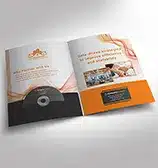
Well-designed educational brochures give patients a clear, take-home reference that supports treatment compliance.
| Healthcare Print Product | Standard Dimensions | Standard Paper Weight / Substrate | Primary Clinical Channel | Best Use Case |
|---|---|---|---|---|
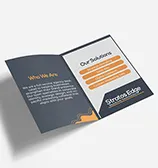
| Patient Folders | 9.0 inches x 12.0 inches | 16pt Heavy Cardstock | Discharge packets, new patient onboarding | Housing diagnostic charts, treatment plans, and CMAs |
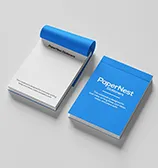
| Intake & Consent Forms | 8.5 inches x 11.0 inches | 2-Part (White / Canary) NCR Stock | Front desk check-in, billing administration | Instant duplicate records without messy carbon paper |
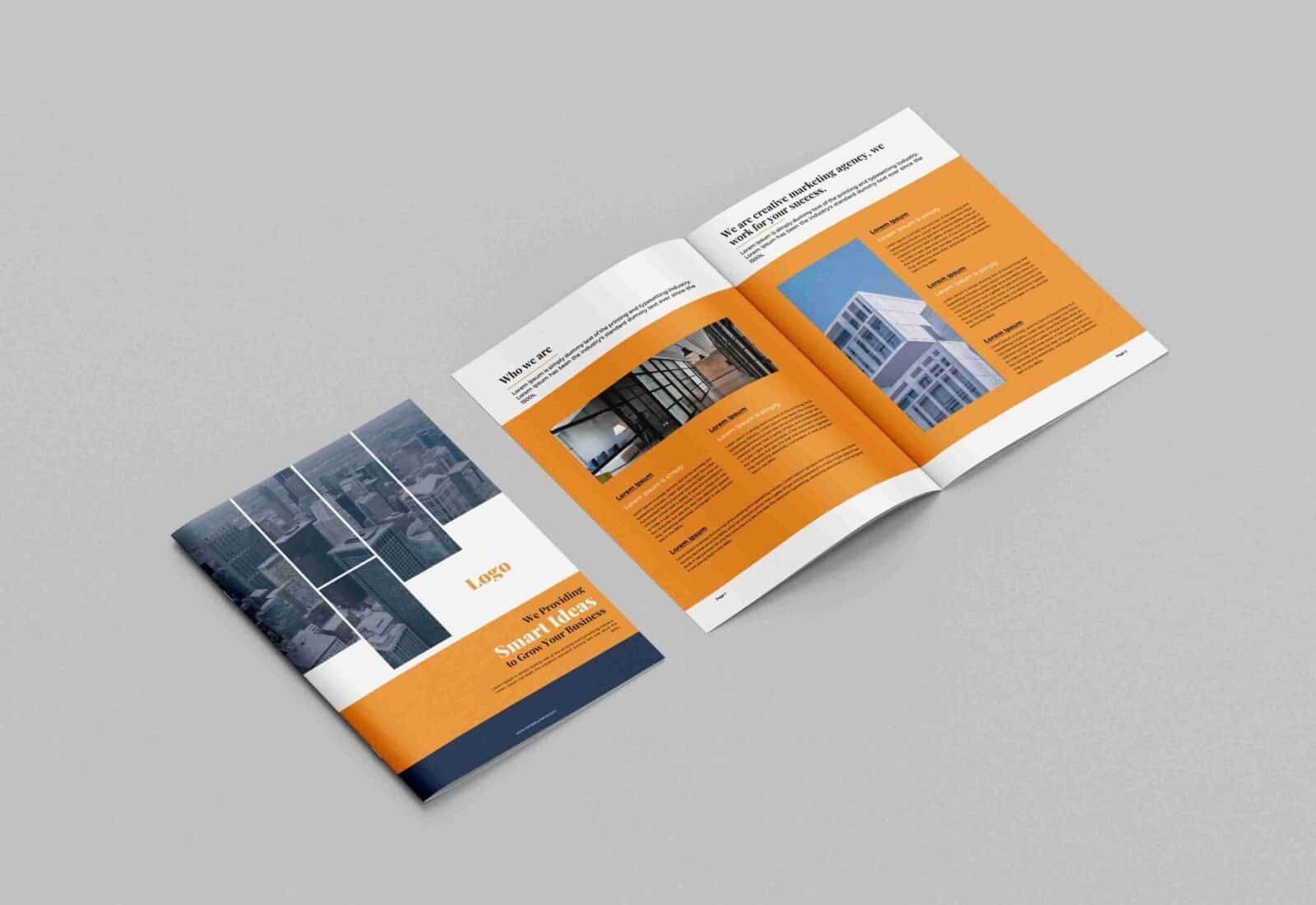
| Educational Brochures | 8.5 inches x 11.0 inches | 100lb Gloss or Matte Text | Waiting room displays, exam room counters | Procedural overviews, post-op care guides |
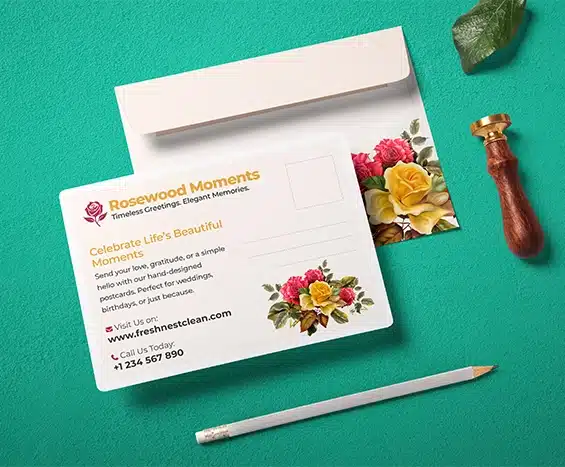
| Direct Mail Postcards | 6.0 inches x 9.0 inches / 6.5 inches x 9.0 inches | 16pt Direct Mail Cover | USPS EDDM / First-Class targeted drops | Seasonal vaccine drives, new provider announcements |
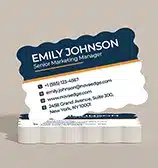
| Appointment Cards | 3.5 inches x 2.0 inches | 16pt Uncoated or Matte Cardstock | Reception check-out desk | Doctor contact information, writable date reminders |
| Mailing Envelopes | 4.125 inches x 9.5 inches (#10) | 24lb White Wove with Security Tint | Patient billing, referral records | Privacy-protected financial & medical mailings |
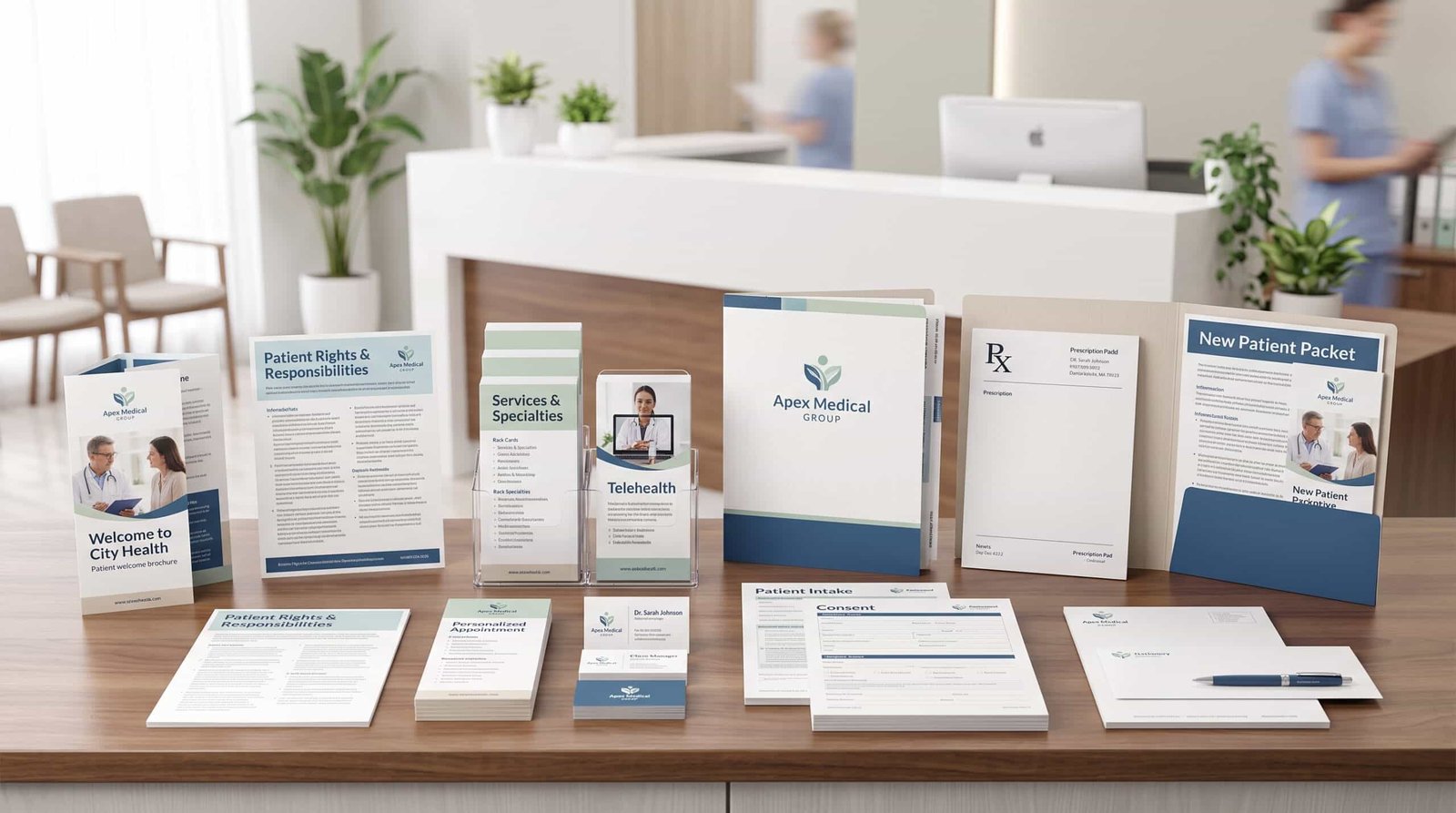
Healthcare print materials require stocks that balance professional aesthetics with functional durability:
Following strict prepress technical rules guarantees that clinical documents, diagrams, and contact details print with razor-sharp precision:
Unifying your clinical stationery and marketing print creates a consistent, reassuring patient experience:
Equipping your medical clinic, dental practice, or healthcare enterprise with clean, dependable print collateral requires a commercial partner dedicated to precision cutting, durable paper stocks, and prompt delivery.
At Printin Budget, we manufacture professional healthcare marketing collateral, clinical intake pads, and patient presentation suites designed to support demanding medical environments. Our prepress specialists review your artwork files for proper resolution, bleed parameters, and postal safety zones before production begins.
Whether you need a short run of patient presentation folders for a boutique specialty clinic or wholesale quantities of multi-part NCR intake forms for a multi-location health system, we deliver quality materials and responsive service to support your operational goals.
Connect with Printin Budget to explore paper stocks, verify your prepress files, or request a custom printing quote for your healthcare practice.
Q1: What are the standard dimensions for clinical patient presentation folders?
A standard medical presentation folder measures 9.0 inches x 12.0 inches when closed, with interior 4.0-inch pockets designed to hold standard 8.5-inch x 11.0-inch documents, consent sheets, and treatment plans without edge overhang.
Q2: What is the benefit of using 2-part carbonless NCR forms in medical practices?
NCR forms use micro-encapsulated dye coatings that transfer pen pressure instantly from the top white sheet to the underlying canary yellow sheet, providing patients with an immediate copy while retaining an exact physical record for medical filing without messy carbon paper.
Q3: What paper stock is recommended for appointment reminder cards?
Appointment cards should be printed on 14pt or 16pt uncoated or matte cardstock (0.014 inches to 0.016 inches thick) so staff can write appointment dates and times cleanly with ballpoint pens or markers without ink smudging.
Q4: What is the USPS barcode clear zone requirement on clinic direct mail postcards?
USPS direct mail rules require maintaining a 4.75 inches x 0.625 inches unprinted rectangular area in the lower-right corner of the address side to allow automated postal sorting machines to read barcodes without interference.
Q5: Why should medical billing envelopes feature interior security tinting?
Security tinting applies a dense crosshatch pattern to the inside lining of the envelope, blocking light transmission so sensitive patient account details, diagnoses, and financial records cannot be read through the paper.
For creative agencies, graphic design studios, marketing consultancies, and commercial brokers, offering physical print collateral is essential for delivering end-to-end

In early-stage fundraising, venture pitches, product launches, and strategic partnership meetings, tactile print collateral establishes corporate legitimacy, conveys vision, and

In corporate summits, industry trade shows, academic symposiums, and large-scale festivals, high-impact event printing sets the operational tone, guides attendee