
























































File Prep 101: Resolution, Bleed & CMYK vs RGB Explained
In commercial printing and custom packaging across the United States, the bridge between creative concept and mechanical manufacturing is the


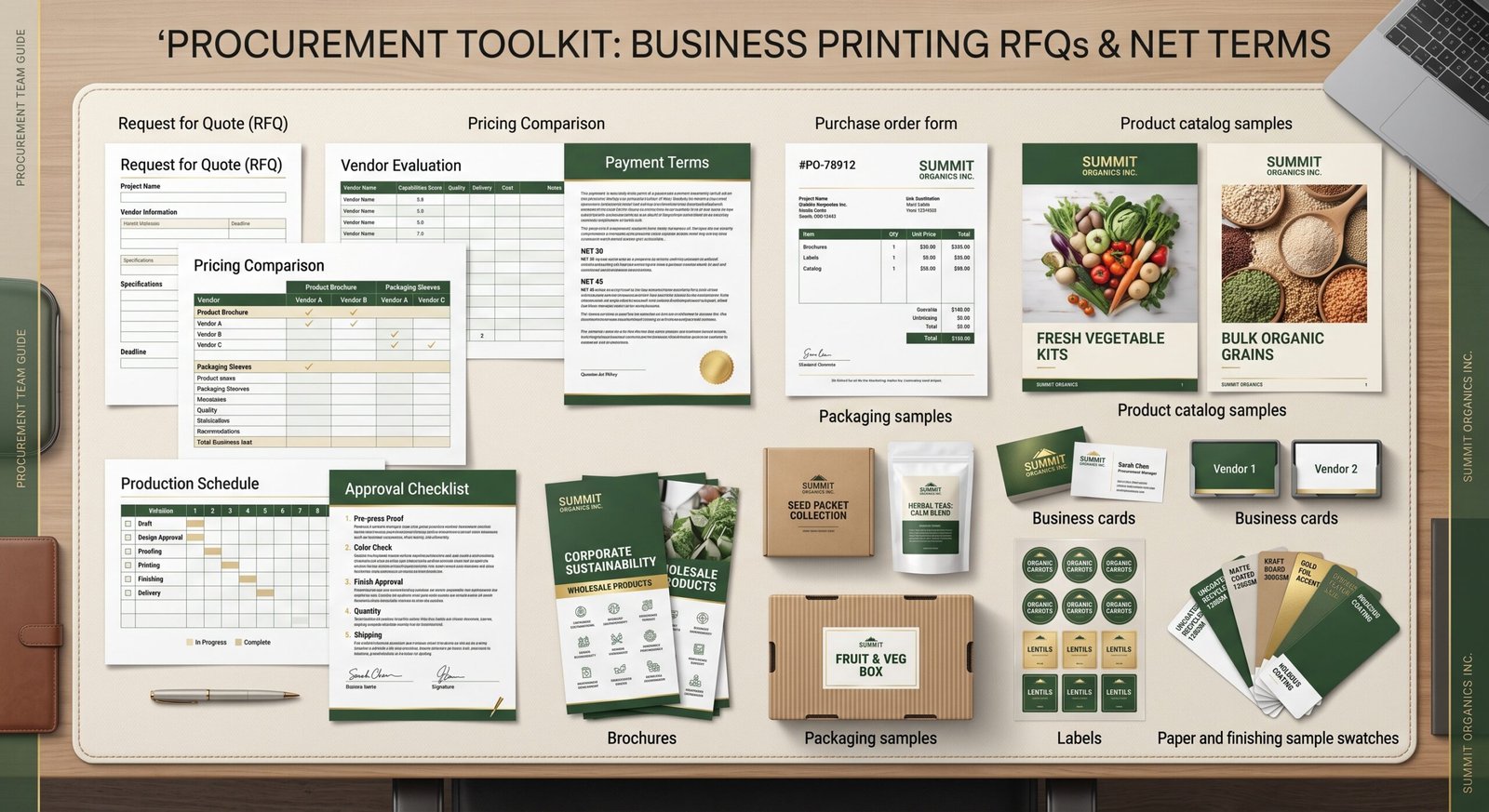
For corporate procurement departments, franchise operations, educational institutions, and marketing agencies managing complex print supply chains, purchasing stationery through standard retail checkout carts is inefficient and restrictive. Off-the-shelf web checkouts cannot accommodate custom finishing specifications, split-location freight distributions, or corporate billing compliance. Sourcing formal business printing quotes via a structured Request for Quote (RFQ) process empowers organizations to negotiate volume pricing, secure dedicated press time, and maintain tight fiscal controls.
Vague RFQ submissions often result in inaccurate estimates, project delays, or unexpected change orders after files reach the prepress department. Submitting a clear, detailed printing RFQ ensures accurate bids, transparent unit tiers, and verified turnaround commitments. Understanding how to outline paper stocks, dimensional trims in inches, specialty finishing treatments, and credit requirements for net terms printing allows purchasing managers and marketing directors across the United States to protect operational budgets and streamline vendor management.
To ensure estimators deliver precise pricing without rounds of back-and-forth clarification, every RFQ package should contain these core technical parameters:
| Procurement Feature | Standard Online Web Checkout | Custom Commercial Print RFQ |
|---|---|---|
| Project Complexity | Standardized catalog items with fixed sizes | Custom dimensions, multi-part kits, complex finishing |
| Pricing Model | Fixed retail unit pricing | Tiered volume pricing based on current paper mill rates |
| Payment Terms | Upfront credit card payment only | Net 30, Net 60, or corporate purchase order (PO) invoicing |
| Logistics Handling | Single destination parcel shipping | Multi-destination freight, split-drops, palletized delivery |
| Prepress Review | Automated algorithmic file checking | Hands-on prepress engineering and physical contract proofs |
| Contract Support | General customer support queue | Dedicated account representative and production manager |
Managing predictable cash flow is critical for enterprises coordinating seasonal marketing rollouts and large-scale operational purchases:
Submitting production-ready digital files alongside your commercial RFQ eliminates prepress surprises and shortens lead times:
Consolidating your organizational printing requirements into a single structured RFQ unlocks significant freight and press efficiencies:
Sourcing large-scale, complex commercial print requires a manufacturing partner with industrial sheetfed offset presses, automated bindery systems, and transparent commercial account management.
At Printin Budget, we deliver competitive enterprise pricing and custom manufacturing designed to keep your business operating efficiently. Our experienced print estimators review your specifications, evaluate paper grain, analyze press sheet layouts, and optimize cutting paths to present the most cost-effective production strategy for your printing quote.
Whether you require a custom quote for a multi-piece marketing kit, an annual supply of administrative forms, or corporate credit approval for net terms, our team provides responsive communication and dedicated prepress oversight to ensure complete success.
Connect with Printin Budget today to submit your commercial RFQ specifications, apply for corporate net terms, or request a custom quotation for your upcoming project.
1. What is the typical turnaround time to receive a custom commercial print quote?
Most standard commercial RFQs are evaluated and priced within 24 to 48 business hours. Highly complex multi-piece projects, custom packaging with bespoke dies, or jobs requiring specialty imported paper stocks may require 48 to 72 hours for complete mill and tooling pricing.
2. How do organizations qualify for net terms on commercial print orders?
Qualified businesses, institutions, and government agencies can apply for Net 30 terms by submitting a formal credit application with three commercial trade references, bank details, and an authorized corporate purchase order. Once approved, production begins without requiring upfront credit card transactions.
3. What is the difference between an RFQ and an instant online quote?
An instant online quote calculates pricing for fixed, standardized sizes and catalog stocks using automated software. An RFQ involves an experienced print estimator who reviews your exact dielines, specs, and volume requirements to calculate optimal press sheet layouts, paper mill discounts, and custom freight rates.
4. Why is it advantageous to request multiple quantity tiers in an RFQ?
Commercial offset presses have upfront mechanical setup costs (imaging aluminum plates and press registration). Requesting pricing for multiple tiers (e.g., 5,000, 10,000, and 20,000 units) allows you to see where unit costs drop significantly, helping you choose the most economical volume for your budget.
5. What bleed and margin standards should be noted in an RFQ specification?
All commercial print files should follow a standard 0.125-inch bleed extending beyond all outer trim lines, with a minimum 0.125-inch internal safe zone (or 0.25 inches for large documents) to ensure typography and logos are never clipped during automated trimming.
In commercial printing and custom packaging across the United States, the bridge between creative concept and mechanical manufacturing is the

For commercial general contractors, civil engineering teams, sports facilities, municipal agencies, and outdoor event organizers across the United States, displaying

In retail promotions, corporate real estate, commercial contracting, and community event marketing across the United States, large-format physical signage delivers