

























File Prep 101: Resolution, Bleed & CMYK vs RGB Explained
In commercial printing and custom packaging across the United States, the bridge between creative concept and mechanical manufacturing is the


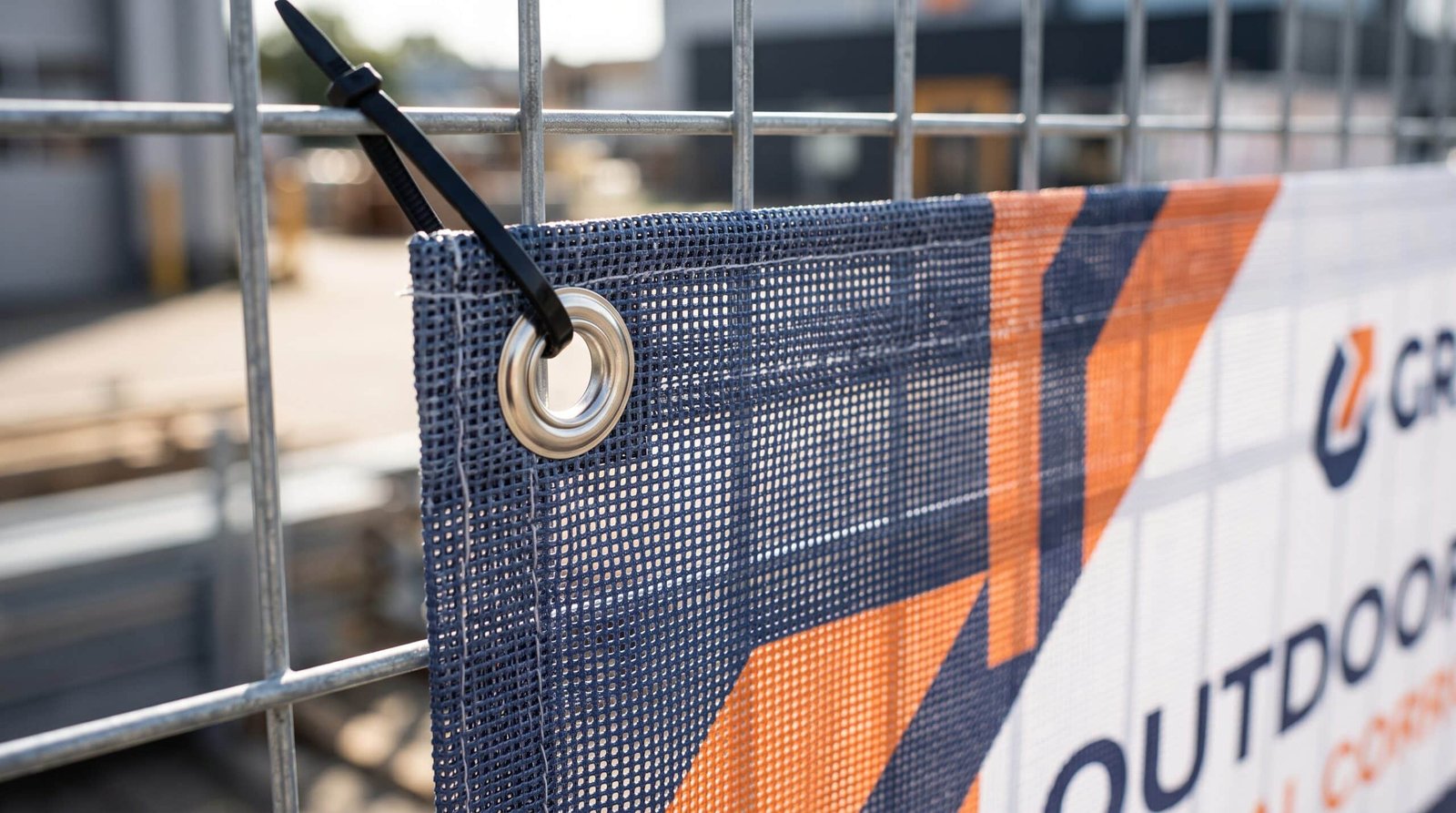
For commercial general contractors, civil engineering teams, sports facilities, municipal agencies, and outdoor event organizers across the United States, displaying large-format signage in open environments presents an engineering challenge. Securing a standard, solid vinyl sheet across an exposed construction chain-link fence, an elevated scaffolding run, or a temporary highway sound barrier creates a massive wind sail. High-velocity wind gusts exert hundreds of pounds of continuous shear stress against grommets, ripping out eyelets, bending perimeter fence posts, and tearing signs to shreds within days. Sourcing engineered mesh banners and commercial-grade wind resistant banners solves this physical challenge by allowing airflow to pass directly through the material.
A standard solid PVC banner creates total airflow blockage, transferring mechanical wind force directly to your mounting anchors. In contrast, specialized outdoor mesh banner material features thousands of micro-perforations woven directly into a high-tensile polyester grid. The resulting structure minimizes aerodynamic drag while maintaining crisp visual clarity and graphic legibility from street-level viewing distances.
Understanding airflow ratios (such as the standard 70/30 weave), specifying heavy-duty reinforced edge webbing in inches, and configuring prepress artwork for high-contrast viewing allows site superintendents, marketing directors, and event coordinators throughout the United States to deploy durable fence banners that withstand severe weather.
The fundamental physics governing mesh signage centers on air permeability and tensile drag coefficients:
Unlike lightweight decorative fabrics, heavy-duty commercial mesh is engineered to survive continuous mechanical friction against chain-link wire and steel scaffolding pipes:
| Structural Specification | 70/30 Construction Mesh Banner | Standard 13 oz Solid Vinyl | 18 oz Blockout Heavy Vinyl |
|---|---|---|---|
| Airflow Permeability | 30% to 40% Continuous Airflow | 0% (Solid Air Resistance) | 0% (Solid Air Resistance) |
| Material Weight | 8 oz to 9 oz per sq yard | 13 oz per sq yard | 18 oz per sq yard |
| Surface Profile | Micro-perforated open mesh | Completely smooth solid sheet | Heavy smooth opaque sheet |
| Tensile Wind Resistance | High (Passes airflow freely) | Low (Billows like a boat sail) | Moderate (Requires heavy posts) |
| Fence Post Stress | Minimal aerodynamic drag | High (Can bend steel posts) | Severe (Dangerous on fences) |
| Color Density / Opacity | Semi-translucent (Requires bold art) | 100% Solid Color Coverage | 100% Total Light Blockout |
| Optimal Installation | Construction fences, scaffold towers | Retail walls, grand openings | Street boulevard light poles |
A mesh banner hung in a windy corridor rarely fails in the field of the graphic; failure almost universally occurs at the perimeter eyelets. Reinforcing every edge preserves your display investment:
Because 30% of a mesh banner consists of open air holes, light passes directly through the substrate. Designing for perforated mesh requires a distinct visual strategy compared to solid paper or opaque cardstock:
Submitting production-ready digital files formatted strictly in inches ensures clean finishing and prevents press delays:
To establish a unified on-site branding program and support balanced website navigation without orphaned pages, pair your perimeter fence mesh with these coordinated commercial solutions:
Manufacturing cleanly hemmed, high-tensile mesh banners requires an experienced large-format manufacturing partner equipped with wide-web UV and latex roll presses, heavy-duty RF seam welders, and dedicated prepress oversight.
At Printin Budget, we manufacture professional mesh banners, reinforced perimeter fence displays, and high-tensile building wraps engineered to withstand harsh wind conditions and seasonal storms. Our prepress technicians inspect your layout dimensions, safe-zone clearances, and grommet alignments before production begins to ensure clean mechanical finishing and dependable display strength for businesses across the United States.
Whether you need a single 6.0-foot x 20.0-foot fence banner for a local commercial renovation or thousands of linear feet of branded mesh for multi-state infrastructure projects throughout the United States, Printin Budget provides tear-resistant polyester weaves, UV-stable inks, and responsive account management.
Connect with Printin Budget today to download large-format fence templates, explore mesh weave swatches, or request an enterprise quotation for your upcoming outdoor project.
1. What is the standard lifespan of an outdoor mesh banner on a construction fence?
An outdoor mesh banner manufactured from 8 oz to 9 oz PVC-coated polyester with heat-welded hems and reinforced webbing typically lasts between 12 to 24+ months, even in high-wind regions. Using UV-cured inks prevents premature sun fading and degradation from rain or snow.
2. Can you see through a mesh banner from the outside?
Mesh banners provide semi-translucency due to their 30% to 40% open-weave structure. During the day, bright ambient outdoor sunlight reflects off the printed front face, making the graphic appear solid and opaque to someone looking in from the street, while workers inside the job site can see through to the outside.
3. What is the best method for installing mesh banners on chain-link fences?
Use heavy-duty, UV-rated nylon cable ties (zip ties) rated for at least 50 to 75 lbs of tensile strength, or elastic rubber ball bungees. Thread fasteners through every brass grommet along the top, bottom, and sides of the banner, pulling the material flat and taut across the fence poles. Fastening every single grommet prevents localized wind flapping that leads to torn corners.
4. How do I clean and maintain outdoor mesh fence banners?
Rinse off job-site dust, dried mud, and road grime using a standard garden hose with mild, non-abrasive dish soap and a soft microfiber cloth or sponge. Avoid harsh chemical solvents, bleach, and high-pressure power washers, which can strip the protective UV clear coat and damage ink adhesion.
5. How are mesh banner artwork files set up to prevent see-through fading?
Because open-weave mesh allows 30% of ambient light to pass through, design with high color saturation and strong contrast. Avoid light pastel colors, fine lines under 2.0 pt, and small body typography. Submitting files in native CMYK with rich black builds (such as C=60, M=40, Y=40, K=100) ensures dense, crisp text legibility from a distance.
In commercial printing and custom packaging across the United States, the bridge between creative concept and mechanical manufacturing is the

In retail promotions, corporate real estate, commercial contracting, and community event marketing across the United States, large-format physical signage delivers

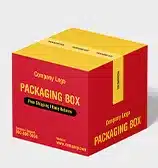
In direct-to-consumer e-commerce, regional logistics, and wholesale shipping across the United States, your exterior shipping carton is the physical handshake