







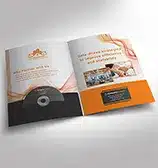
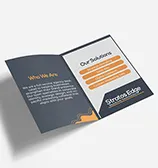
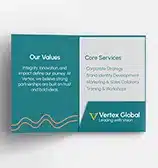
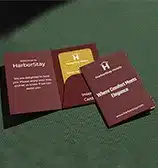












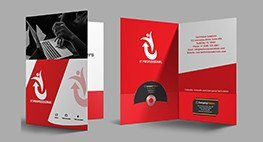
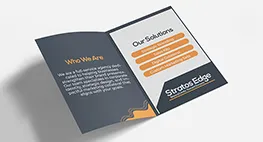
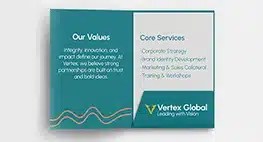
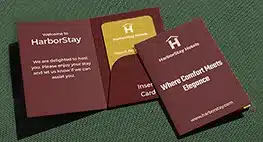











Tri-Fold vs Bi-Fold vs Z-Fold vs Gate-Fold Brochures: Layout Guide
In commercial sales, trade show marketing, and corporate communications, brochures remain one of the most versatile physical collateral formats available.

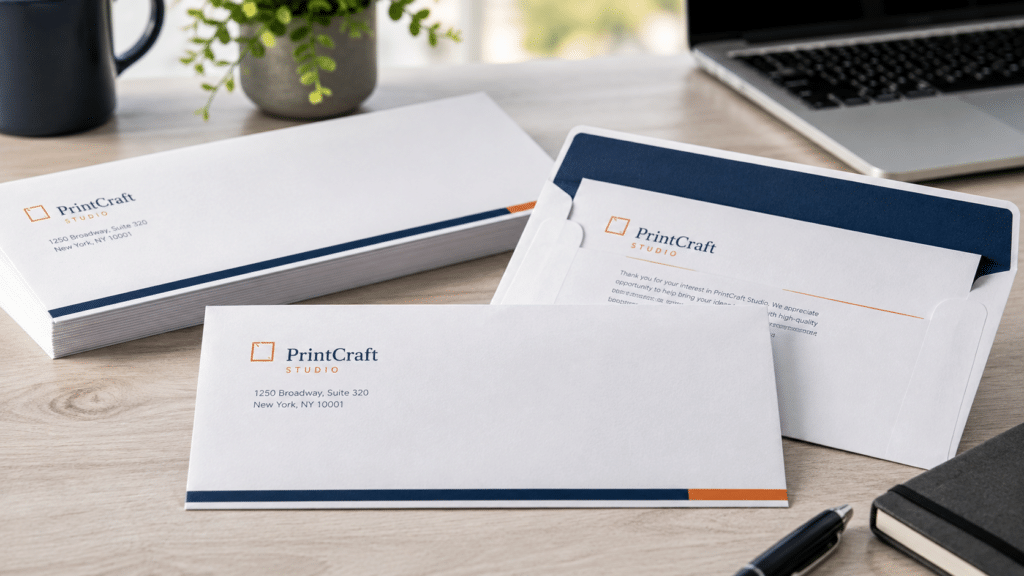
In corporate communication, direct mail marketing, and billing workflows, sending professional physical correspondence remains a vital part of daily business operations. While digital messaging handles quick notes, official contracts, monthly statements, invoices, and formal corporate letters still require secure paper mailing. A custom-branded envelope serves as the initial physical touchpoint for your message, establishing immediate credibility before the recipient even breaks the seal.
Selecting the right commercial envelope size is essential for ensuring your mailings look polished and function smoothly. The two most widely used standard commercial envelope sizes in North America are the #10 envelope size and the #9 envelope size.
Understanding how these two sizes differ in dimensions, capacity, and operational usage helps companies streamline their direct mail operations and optimize their business envelope printing across the United States.
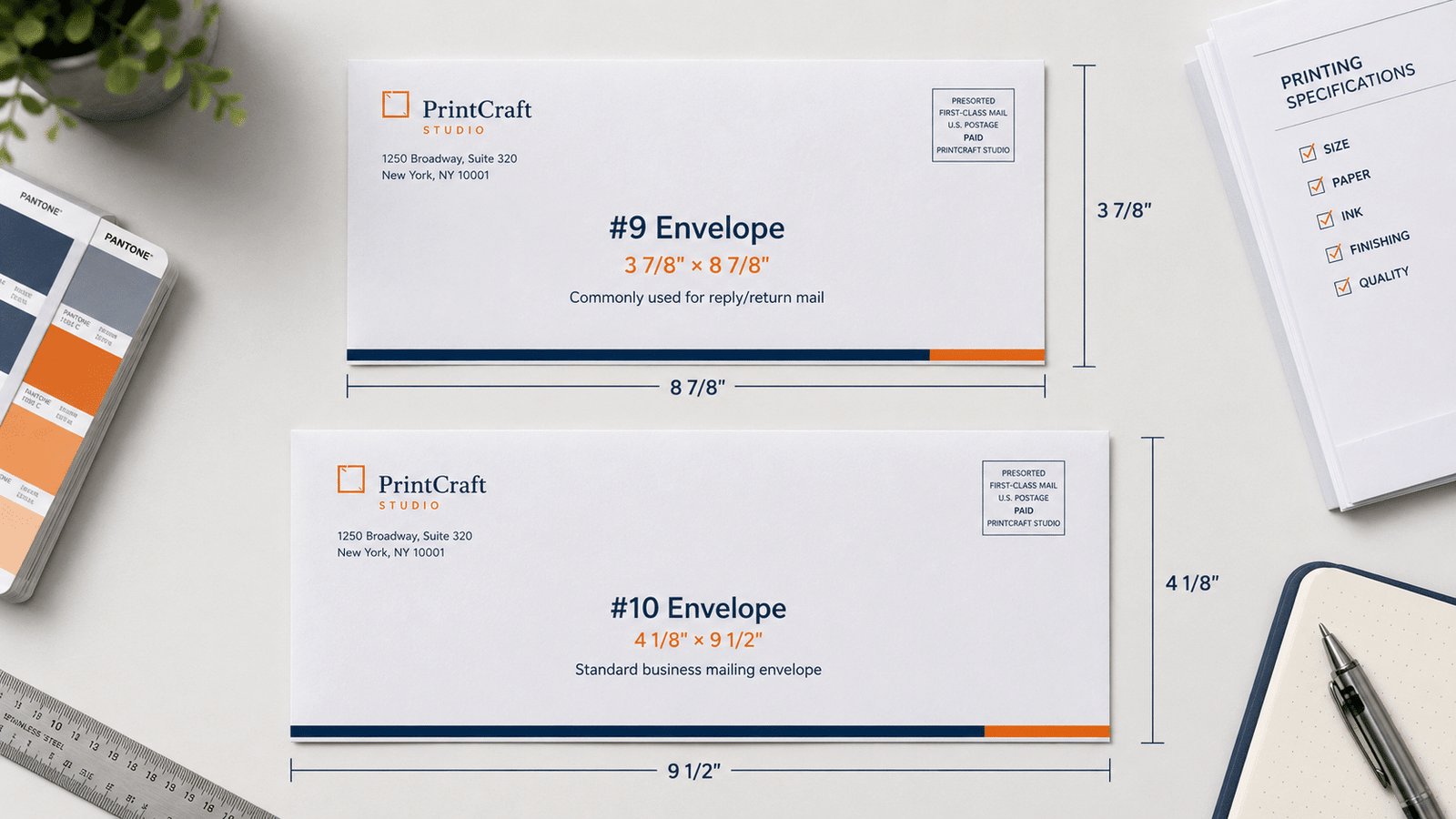
While #9 and #10 envelopes look similar at a glance, their physical dimensions serve distinct operational purposes in commercial mailing.
The primary reason both sizes exist side-by-side in commercial printing is the concept of envelope nesting.
When sending out direct-response mailings, nonprofit donation requests, utility bills, or municipal notices, companies often require the recipient to send back a physical check, signed ballot, or completed order form. Because the #9 envelope is roughly 1/4-inch shorter and 5/8-inch narrower than a #10 envelope, it fits completely flat inside the larger envelope without requiring extra folding or causing paper jams during automated insertion.
The #10 envelope is the primary workhorse of corporate office stationery. It provides ample room for multi-page documents while staying within standard First-Class letter-rate mailing guidelines.
While #10 envelopes serve as outbound carriers, #9 envelopes function primarily as reply vehicles that facilitate direct customer responses.
Both #9 and #10 envelopes are available in regular (solid face) or windowed configurations depending on your mailing workflow.
| Feature | Regular (Solid Face) Envelopes | Window Envelopes |
|---|---|---|
| Front Panel | Solid paper stock across the entire front | Clear poly window positioned in the lower-left corner |
| Address Method | Direct inkjet printing or applied address labels | Document address shows directly through the transparent window |
| Best Suited For | Executive correspondence, marketing mailers, and PR | Invoices, monthly billing statements, and payroll checks |
| Efficiency Benefit | Complete design freedom for custom branding | Eliminates the need to print matching addresses on envelopes |
The durability and appearance of your envelopes depend on selecting quality paper stocks and reliable adhesive seals.
When mailing payroll checks, financial statements, medical invoices, or proprietary agreements, keeping sensitive data private during transit is a legal and ethical priority.
Security-tinted envelopes feature a patterned blue or gray cross-hatch printed across the interior lining. This dense interior pattern blocks light transmission, preventing unauthorized individuals from reading enclosed account numbers, social security details, or check amounts through the paper when held up to light.
Designing custom envelopes requires adherence to postal clear zones and mechanical press gripper margins to prevent production errors.
Creating a cohesive stationery suite reinforces your brand identity across all official communications sent throughout the United States.
Equipping your business with crisp, reliable mailing stationery requires a commercial printing partner committed to precise folding, quality paper stocks, and sharp color reproduction.
At Printin Budget, we print professional custom envelopes designed to streamline your business correspondence and direct mail campaigns. Our prepress specialists review your artwork files for proper resolution, postal clearances, and color profiles before your order goes to press.
Whether you need a short run of executive stationery or wholesale quantities of nested #9 and #10 envelopes for high-volume billing operations, we deliver durable paper stocks and dependable service to support your commercial goals.
Connect with Printin Budget today to explore envelope styles, verify your artwork specifications, or request a custom printing quote for your project.
Q1: What are the exact dimensions of #9 and #10 business envelopes?
A standard #10 business envelope measures 4.125″ × 9.5″ (4-1/8″ × 9-1/2″), while a standard #9 business envelope measures 3.875″ × 8.875″ (3-7/8″ × 8-7/8″).
Q2: What is envelope nesting and why are #9 envelopes used with #10 envelopes?
Envelope nesting is the practice of inserting a smaller reply envelope inside a larger outbound mailing. Because a #9 envelope is roughly 1/4-inch shorter and 5/8-inch narrower than a #10 envelope, it slides flat inside a standard #10 envelope without extra folding or causing jams in automated insertion machines.
Q3: When should a business choose window envelopes over regular solid face envelopes?
Window envelopes (featuring a clear poly window in the lower-left corner) are ideal for recurring invoices, monthly billing statements, and payroll checks because the recipient address prints directly on the enclosed document, eliminating duplicate envelope addressing. Regular solid-face envelopes are preferred for executive correspondence, branding letters, and marketing mailers.
Q4: What is security tinting on business envelopes?
Security tinting is a patterned blue or gray crosshatch printed on the inside lining of an envelope. This opaque pattern blocks light transmission, preventing unauthorized individuals from reading enclosed checks, social security numbers, or sensitive financial statements through the paper.
Q5: What paper weight is standard for commercial business envelopes?
24lb white wove paper is the commercial benchmark for everyday business mailing and automated mailing equipment. For executive stationery, corporate legal notices, or high-stakes proposals, a heavier 28lb premium wove or textured linen stock provides greater opacity and a more substantial feel.
In commercial sales, trade show marketing, and corporate communications, brochures remain one of the most versatile physical collateral formats available.

Selecting the right physical print format is one of the most critical decisions when launching a direct-to-consumer marketing or local

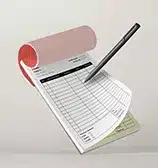
In service industries, field contracting, logistics, and wholesale commerce, generating instant physical documentation during client interactions remains critical for legal