





























White-Label Printing for Agencies: Outsourced Printing Services
For creative agencies, graphic design studios, marketing consultancies, and commercial brokers, offering physical print collateral is essential for delivering end-to-end


In the food service and hospitality industry, physical print collateral shapes the entire customer dining experience from the moment a guest sits down to the arrival of an off-premise takeout delivery. Branded menus, table signage, takeout box inserts, and kitchen order pads act as direct extensions of your culinary identity, reinforcing cleanliness, culinary quality, and operational professionalism.
Flimsy, stained menus or poorly formatted delivery flyers can diminish a restaurant’s reputation before the first course is served. Conversely, investing in commercial-grade restaurant printing provides clear visual hierarchy, durable food-safe materials, and appetizing photographic fidelity. Understanding how to select the right print formats, paper stocks, protective laminations, and prepress configurations enables restaurant owners and franchise operators to streamline operations and maximize profitability across the United States.
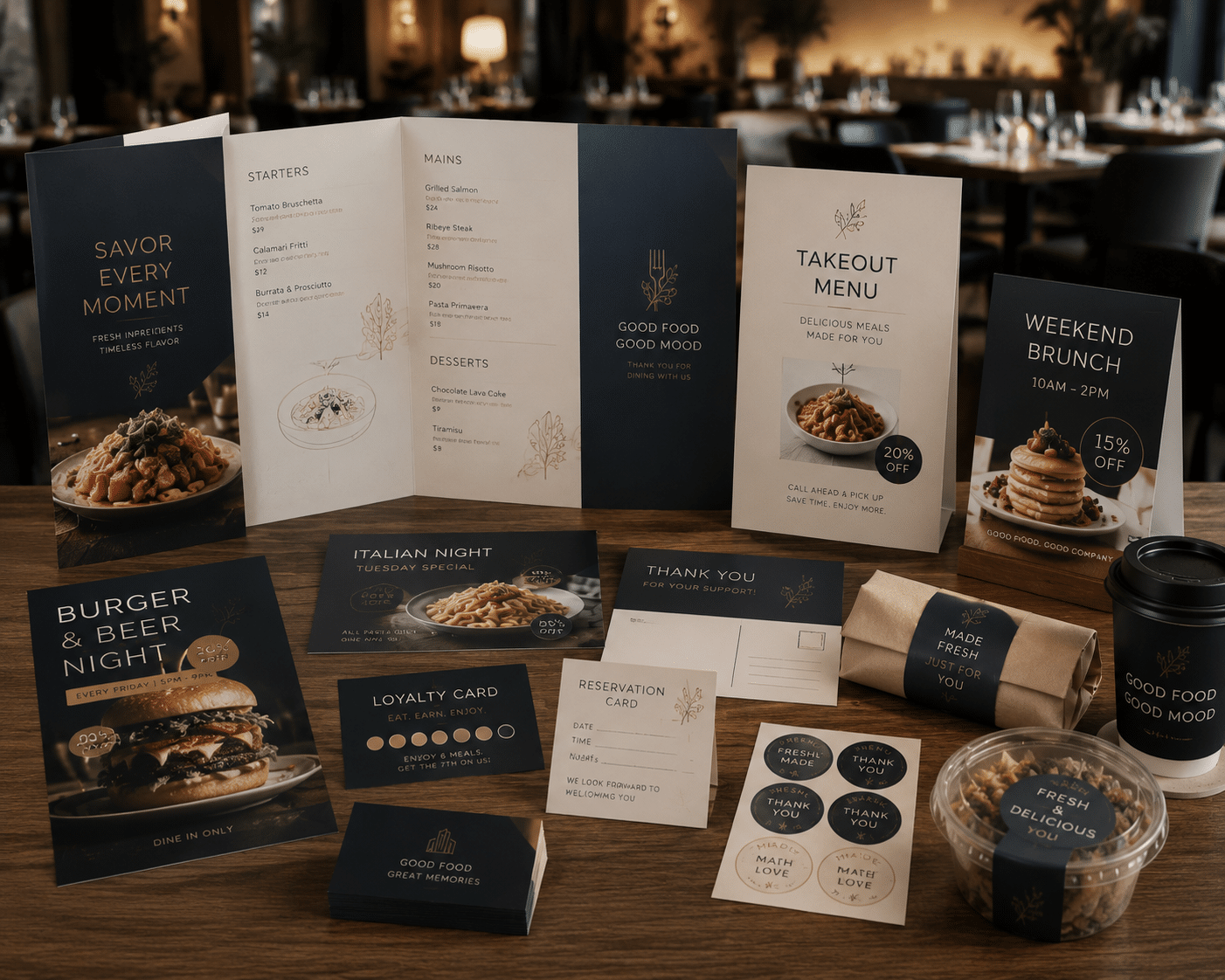
A complete restaurant marketing and operational print system incorporates front-of-house dining pieces, to-go packaging collateral, and back-of-house tracking forms:
Matching your menu structure to your dining concept ensures guests can browse dishes effortlessly without visual clutter:
| Product Format | Standard Dimensions | Standard Paper Weight / Substrate | Primary Restaurant Use | Key Benefit |
|---|---|---|---|---|
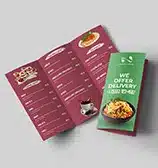
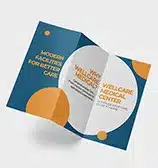
| Tri-Fold Takeout Menus | 8.5 inches x 11.0 inches | 100lb Gloss or Matte Text | Takeout bags, counter stacks, mailers | Compact, cost-effective for high-volume distribution |
| Dine-In Menu Cards | 8.5 inches x 11.0 inches / 11.0 inches x 17.0 inches | 16pt Cardstock with Heavy Lamination | Tabletop dining, bar tops, patio seating | Spill-proof, wipe-clean surface for repeated handling |
| Table Tent Cards | 4.0 inches x 6.0 inches / 5.0 inches x 7.0 inches | 14pt or 16pt Cover Stock | Dining tables, bar counters, hostess stands | Freestanding dual-sided display for dessert & drink promos |
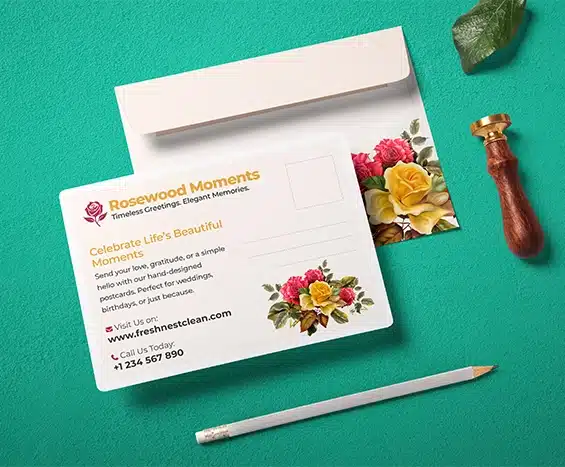
| Direct Mail Postcards | 6.0 inches x 9.0 inches / 6.5 inches x 9.0 inches | 16pt Direct Mail Cover | EDDM routes, local residential drops | High local visibility with zero-friction envelope handling |
| Custom Packaging Labels | Custom sizes / 2.0 inches x 2.0 inches | Waterproof BOPP Film / Gloss Paper | Delivery bag seals, drink lids, takeout containers | Oil-resistant, moisture-proof, brand reinforcement |
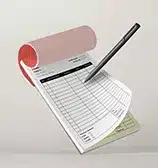
| Kitchen NCR Order Pads | 5.5 inches x 8.5 inches / 8.5 inches x 11.0 inches | 2-Part (White / Canary) NCR Stock | Server order taking, kitchen pass, billing | Instant duplicate records without messy carbon paper |
Restaurant environments subject printed materials to frequent handling, food spills, grease, and cleaning sanitizers:
Transform static print collateral into measurable digital ordering channels by integrating responsive tracking features:
Adhering to standard commercial prepress parameters ensures sharp menu typography, vibrant food imagery, and clean finishing cuts:
Creating a unified visual identity across every dining touchpoint reinforces brand loyalty:
Equipping your restaurant, cafe, or catering operation with crisp, durable print materials requires a commercial printing partner committed to vivid color reproduction, heavy-duty substrates, and reliable turnarounds.
At Printin Budget, we manufacture professional restaurant marketing materials, menus, and operational paperwork designed to help food service businesses grow. Our prepress specialists review your menu layouts, bleed margins, and image resolutions before production begins.
Whether you need a quick run of wipe-clean dine-in menus, bulk quantities of tri-fold takeout menus, or custom packaging labels for an expanding delivery fleet, we provide dependable service and quality materials to support your goals.
Connect with Printin Budget to explore paper stocks, verify your folding templates, or request a custom printing quote for your restaurant project.
Q1: What are the standard dimensions for restaurant takeout menus?
The standard flat size for a tri-fold takeout menu is 8.5 inches x 11.0 inches, which folds down into a portable finished size of 3.687 inches x 8.5 inches. Larger takeout menus often use 11.0 inches x 17.0 inches flat sheets folded in half to 8.5 inches x 11.0 inches.
Q2: Why is synthetic BOPP material recommended for restaurant packaging stickers?
BOPP (Biaxially-Oriented Polypropylene) is a synthetic film that is waterproof, tear-resistant, and impervious to food oils, grease, and condensation, ensuring delivery seals and bottle labels remain intact.
Q3: How do 2-part carbonless NCR forms work for restaurant kitchen order pads?
NCR (No Carbon Required) forms use a chemical micro-encapsulation system where pen pressure on the top white sheet releases dye that reacts with the receptor coating on the underlying canary yellow sheet, producing an instant duplicate copy for the kitchen without messy carbon paper.
Q4: What cardstock thickness is best for restaurant table tents?
Freestanding table tents should be printed on rigid 14pt or 16pt cardstock (0.014 inches to 0.016 inches thick) to ensure they stand upright on dining tables and bar tops without sagging or curling.
Q5: What bleed margin is required for printed restaurant menus?
A standard 0.125-inch bleed is required on all four outer edges of the menu artwork to prevent unprinted white edges from showing after mechanical cutting.
For creative agencies, graphic design studios, marketing consultancies, and commercial brokers, offering physical print collateral is essential for delivering end-to-end

In early-stage fundraising, venture pitches, product launches, and strategic partnership meetings, tactile print collateral establishes corporate legitimacy, conveys vision, and

In corporate summits, industry trade shows, academic symposiums, and large-scale festivals, high-impact event printing sets the operational tone, guides attendee